
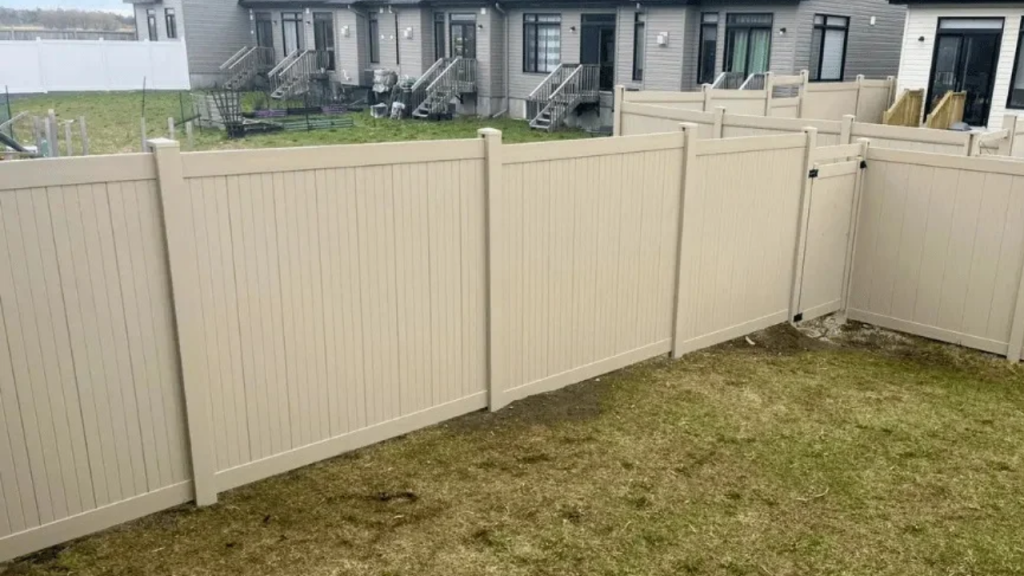
Quick Overview
- Vinyl is low maintenance, not no maintenance. Rain moves dirt around but does not wash it off.
- Most fences need a thorough wash once or twice a year, in spring and fall, with a light rinse whenever debris builds up.
- Mild dish soap, warm water, and a soft brush handle nearly every job. Harsh solvents, steel wool, and paint do more harm than good.
- Green algae and mould in shaded spots respond to white vinegar or an oxygen-based cleaner. Chlorine bleach is a last resort, and it should never touch coloured or woodgrain vinyl.
- In Ottawa, the seasonal jobs matter as much as the washing: rinse off road salt in spring, keep snow off the panels in winter, and make sure post caps are seated before freeze-up.
- A gate that drags or will not latch is often a hardware or post problem, not a cleaning problem.
Why Vinyl Still Needs Care
Vinyl never needs sanding, staining, or painting, and that is why many people call it maintenance free. The surface is smooth and does not absorb water, so dirt sits on top instead of soaking in. That is a real advantage, but it does not mean the fence cleans itself.
Left alone, grass clippings, pollen, tree sap, and road dust bake onto the surface. Shaded sections, or ones hidden behind shrubs, collect a green or black film of algae and mildew. Fences facing a busy road pick up a grey layer of exhaust and dust. A short wash a couple of times a year keeps all of this from setting in, and it takes far less effort than scrubbing off a year of buildup.
A fence that was installed well is also easier to keep clean. When a reliable fence company Ottawa homeowners trust sets the posts straight and the panels snug, there are fewer gaps where dirt, water, and algae can collect.
What You Need
The toolkit is simple:
- A garden hose with an adjustable spray nozzle
- A bucket of warm water with a few tablespoons of mild liquid dish soap
- A soft-bristle brush, a sponge, or a microfibre cloth
- White vinegar and an oxygen-based cleaner for algae and mould
- Rubbing alcohol for tree sap
Keep these away from the fence: acetone, paint thinner, mineral spirits, steel wool, wire brushes, and metal scrapers. Solvents can soften and discolour vinyl, and abrasive tools leave tiny scratches that trap dirt and make the fence get dirty faster.
The Basic Wash, Step by Step
- Rinse first. Spray the whole fence from top to bottom to lift loose dirt, grass clippings, and cobwebs. Scrubbing dry grit acts like sandpaper on the glossy surface.
- Mix the soap. Use warm water with a small amount of mild dish soap. A strong solution is not needed.
- Scrub in sections. Work in lengths of eight to ten feet, from the top rail down. Washing from the bottom up lets dirty runoff streak the clean panels.
- Rinse right away. Do not let soap dry in the sun. Dried soap leaves streaks and attracts new dust.
Choose a cloudy day if you can. Direct sun dries the soap too quickly.
Removing Stubborn Stains
Soap and water will not solve everything. Match the cleaner to the stain:
Algae and mould. Mix white vinegar and water at roughly three parts water to one part vinegar, spray it on, and leave it for 10 to 15 minutes. Scrub gently with a soft brush and rinse well. An oxygen-based cleaner dissolved in warm water works well on heavier growth and is gentler on nearby plants.
Tree sap and pollen. Press a cloth dampened with rubbing alcohol onto the sap for about a minute, wipe it away, and rinse with soapy water.
Grass stains. Warm soapy water and a soft brush. Rinsing after mowing keeps these from setting.
Rust-coloured marks. Vinyl does not rust, but iron-rich water or metal objects left against the fence can leave orange stains. A paste of baking soda and water, left on for 15 minutes and then scrubbed softly, handles mild marks. Test any stronger product on a hidden spot first.
Rubber scuffs. A damp melamine sponge with very light pressure. It works like a fine abrasive, so use it sparingly.
Paint splatter. A plastic putty knife and a little rubbing alcohol. Never use a metal scraper.
A word about bleach
Many websites say to clean vinyl with bleach and water. Chlorine bleach can strip the colour from tan, grey, and woodgrain vinyl, and it can also leave residue on white panels and harm nearby plants. If you use it at all, it should be heavily diluted, on plain white vinyl only, and rinsed off thoroughly. Vinegar or an oxygen-based cleaner handles most jobs without the risk.
Can You Pressure Wash a Vinyl Fence?
You can, but carefully. High pressure can crack panels, scar the finish, and force water into hollow posts and rail seams, where it can freeze and expand later. If you use a pressure washer:
- Keep the pressure low, in the range of 1,200 to 1,500 PSI
- Use a wide fan tip, such as a 25 or 40 degree nozzle
- Stay one to three feet from the fence
- Keep the wand moving and spray downward, never up into seams or under post caps
A hose and a brush are enough for most fences. If you hire someone, ask whether they use a low-pressure wash method for vinyl, because some pressure settings meant for decks and driveways are far too strong.
What About Chalky or Faded Vinyl?
Older vinyl can develop a dull, chalky look. This is surface oxidation. The sun slowly wears the outermost layer, leaving a powdery film behind. Soap alone will not remove it. A soft brush and a vinyl-safe restoring product can bring back the colour, but heavy oxidation does not always come fully clean. Dark colours tend to show it sooner. If cleaning does not make a difference, it is usually a sign the fence is aging, not that it needs another wash.
A Year-Round Maintenance Plan for Ottawa
Ottawa gives a fence a lot to deal with: strong summer sun, spring pollen and sap, heavy snow, road salt, and dozens of freeze-thaw cycles each winter. A simple seasonal routine covers it.
Spring
- Wash off the salt. Fences near roads and sidewalks collect a film of salt and slush spray. Do a full wash as soon as the weather allows.
- Walk the fence line. Look for posts that have lifted or leaned, gaps under panels, and gates that no longer close properly. These are signs of frost movement.
- Check the hardware. Clean and lubricate hinges, latches, and drop rods with a silicone-based spray.
- Deal with sap and pollen early, before summer heat bakes it in.
Summer
- Keep plants back. Trim shrubs and vines so air can move around the panels. Damp foliage against vinyl is the main cause of algae.
- Rinse the base after mowing. Wet clippings thrown against the bottom rail feed mould.
- Redirect sprinklers. Constant spray causes algae and mineral stains, especially on well water.
Fall
- Do the second wash before the snow arrives.
- Clear leaves and mulch away from the base of the fence.
- Check every post cap. A missing or loose cap lets rain into a hollow post, where it can freeze and crack the post from the inside. Press caps down firmly, and replace any that are cracked.
- Trim overhanging branches that could drop under an ice load.
Winter
- Do not pile snow against the fence. The weight of a packed snowbank can bow panels and push rails out of their slots.
- Take care with tools. Vinyl is less flexible in deep cold, so keep shovels, ice chippers, and snowblower discharge away from the panels.
- Expect small changes in gates. Cold shrinks both metal and plastic slightly, so a gate may stick or fail to latch in January. A little hinge adjustment usually fixes it.
Fixing a Gate That Drags or Will Not Latch
Gates are the moving part of a vinyl fence, so they are usually the first to show a problem.
Self-closing hinges. If a gate closes too slowly or slams, the spring tension can be adjusted. Most spring hinges have a small pin or an Allen key slot for this. Make small changes, one notch at a time, and check the manufacturer instructions for your hinge. Pool gates must close and latch on their own, so keep that hardware working.
Sagging gates. If the latch side is dropping, adjusting the spring will not help. Sagging usually means the gate frame is out of square or the hinge post has moved. A diagonal brace across the gate can pull it back into shape, but if the post itself is leaning, the problem is the foundation.
Posts need to be set below the frost line, which in Ottawa means a depth of about 3.5 to 4 feet. A post set shallower than that can lift or tilt with frost, and no amount of hinge tuning will keep the gate aligned. If your gate stops working properly every winter, it is worth having a professional look at the post. Experienced fencing contractors Ottawa homeowners hire will be able to tell you whether a gate needs adjusting, bracing, or a reset post.
Things That Can Void a Warranty
Most manufacturer warranties cover defects in the product, not damage from cleaning or installation mistakes. Warranties commonly exclude damage from:
- Paint, stain, or sealant applied to the vinyl
- Solvents, abrasive scrubbers, or strong chemicals
- Pressure washing at high settings
- Posts set too shallow for the local frost line
- Impact from mowers, vehicles, or equipment
Read the warranty that came with your fence, and keep it. If you are planning a new vinyl fence, ask what the warranty covers and what it excludes before you sign.
When to Call a Professional
Washing a fence is a weekend job. These are not:
- Posts that lean, lift, or have moved after winter
- Panels pushed out of their rails
- A gate that has dropped or will not close even after hinge adjustments
- Cracked posts or rails
- Large sections of damage after a storm or a fallen branch
Vinyl is modular, so a damaged section can often be replaced without rebuilding the whole fence. When you are comparing quotes for a repair or a new fence, ask how the posts will be set and what depth they will reach.
FAQs
How often should I clean my vinyl fence? Give it a thorough wash once or twice a year, in spring and fall. Rinse it with a hose whenever dirt, pollen, or clippings build up.
What is the best cleaner for a vinyl fence? Mild dish soap in warm water, applied with a soft brush. Use white vinegar or an oxygen-based cleaner for algae and mould.
Can I use bleach on a vinyl fence? Only with great care, and never on coloured, tan, grey, or woodgrain vinyl. Vinegar or an oxygen-based cleaner is a safer choice for most stains.
Can I pressure wash my vinyl fence? Yes, on a low setting with a wide fan nozzle, held a foot or more away and sprayed downward. A hose and a brush are safer and usually enough.
How do I get green algae off a vinyl fence? Spray a mix of white vinegar and water, wait 10 to 15 minutes, scrub gently, and rinse. Trimming plants back and improving airflow keeps it from returning.
Why is my vinyl fence turning yellow or chalky? This is usually sun exposure wearing the surface over time. A soft brush and a vinyl-safe restorer can help, but heavy oxidation may not come fully clean.
Should I paint my vinyl fence? No. Vinyl expands and contracts with temperature, so paint peels and flakes, and it can void the warranty.
Do I need to do anything to my vinyl fence before winter? Wash it, clear debris from the base, make sure all post caps are secure, trim overhanging branches, and plan where you will put shovelled snow.
Summary
A vinyl fence asks for much less than wood, but it does need a little attention. Wash it in spring and fall with mild soap and a soft brush, treat algae with vinegar or an oxygen-based cleaner, and avoid solvents, abrasives, paint, and high pressure. In Ottawa, rinse off road salt in the spring, secure post caps in the fall, and keep snow and metal tools away from the panels in winter. When a gate or post keeps shifting, look at the foundation first, because that is where most long-term problems start.
Note: This blog post is informational. Its purpose is to add useful content about fencing and fence types to the website and to link readers to our relevant service pages through keywords. This builds topical authority in the fencing niche and helps the site rank for more keywords over time.