
Quick Overview
- Wood typically has the lowest upfront cost of the three, but it carries the highest long-term cost once staining and sealing are factored in over the years.
- Vinyl costs more to install initially, but it needs essentially no ongoing maintenance, which often makes it the more economical choice over a 15 to 20 year span.
- Chain link is the most budget-friendly option overall and requires almost no upkeep, though it offers little to no visual privacy on its own.
- Wood and vinyl are the two real options for full privacy, since both can be built as solid, gap-free panels. Chain link is open by design and cannot match that on its own.
- In Ottawa specifically, how a fence is installed below ground matters just as much as the material itself, since freeze-thaw cycles and a deep frost line can undermine even a well-chosen material if the posts are not set properly.
Why This Comparison Is Harder Than It Looks
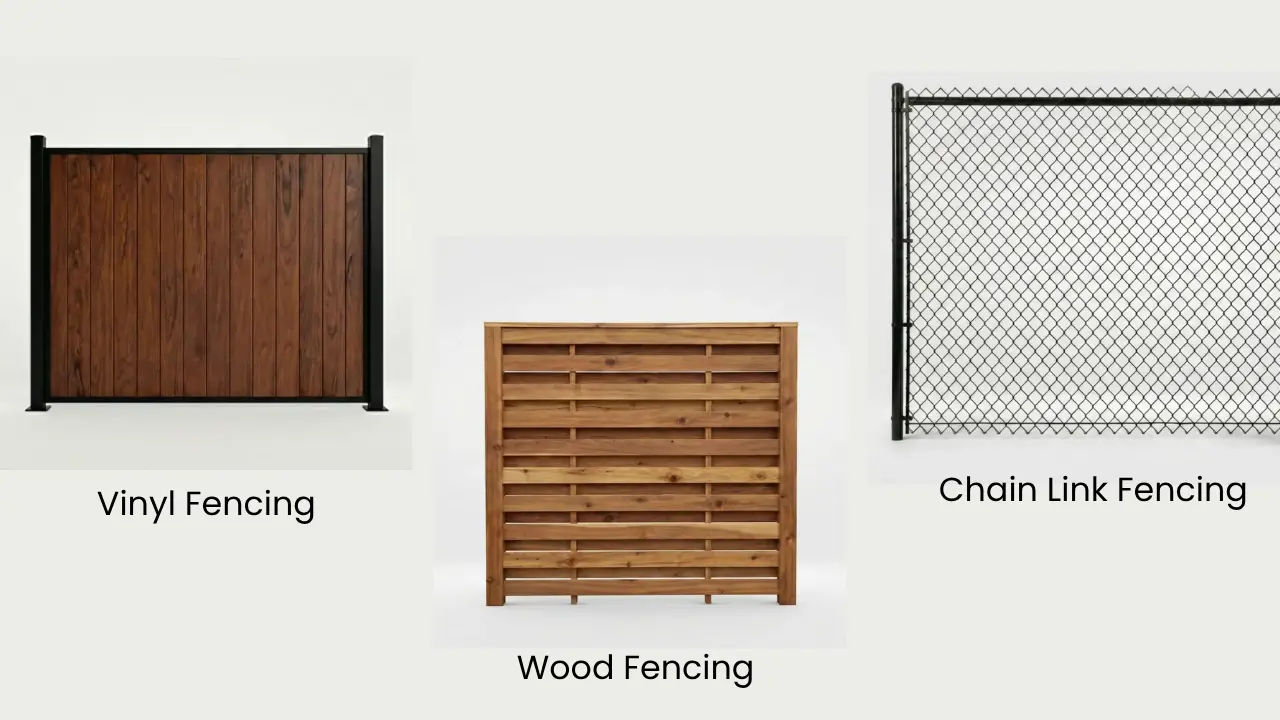
At first glance, this decision looks like a straightforward budget question. In practice, the material with the lowest quote is not always the material with the lowest total cost, and the “best” choice really depends on how long you plan to stay in the property, how much upkeep you are willing to do, and what you actually need the fence to accomplish.
Upfront Cost vs. What You Actually Pay Over Time
This is where a lot of the confusion starts. Chain link tends to carry the lowest initial installed price of the three, which is exactly why it gets treated as the default budget option. But wood is also the only one of the three that requires regular, recurring maintenance to stay in good shape. Staining or sealing every few years adds up meaningfully over a 15 to 20 year period, and that ongoing cost rarely factors into the sticker shock comparison people make at the quote stage.
Vinyl sits at a noticeably higher starting price, generally a meaningful premium over wood. What it does not carry is any real ongoing maintenance cost. No staining, no sealing, no repainting. Once installed, the only expense is the occasional wash. Over a long enough timeline, that difference is often enough to make vinyl the more economical option overall, even with the higher price tag at the start.
Chain link is the clear value leader on cost from day one and stays that way, since it requires close to zero maintenance investment either. The tradeoff is not financial. It is what the fence actually does for you, which is where privacy comes into the picture.
Maintenance: What You’re Actually Signing Up For
Wood is a living, breathing material in the sense that it constantly reacts to humidity and temperature. To keep it from warping, cracking, or rotting, it needs to be power washed and resealed or stained on a regular cycle. Skipping this does not just hurt the appearance. It actively shortens the life of the fence.
Vinyl is close to a “set it and forget it” material. It does not absorb moisture, so there is no swelling, no rot, and no need for any protective coating. Maintenance is limited to an occasional rinse to knock off surface dirt or mildew.
Chain link shares that same low-maintenance profile, though for different reasons. Galvanized or vinyl-coated steel resists corrosion well on its own, so upkeep is mostly limited to clearing vegetation that grows into the mesh and occasionally checking that hardware and tension are still solid.
Privacy, Security, and What Each Material Is Actually Good For
Wood and vinyl are the two materials capable of true privacy, since both can be built as solid panels with no gaps, typically around 6 feet tall. Both also serve as a reasonable physical deterrent, since a flat panel is harder to see over or climb than an open structure.
Chain link is the opposite by design. It is an open, see-through barrier, which makes it excellent for containing pets and children and marking a boundary clearly, but it does not provide meaningful visual privacy on its own. Privacy slats can be woven through the mesh, but most homeowners find the result looks more like a compromise than a real solution, and by the time you add the slats, the cost starts creeping closer to a basic wood installation anyway.
Worth noting: chain link’s open visibility is sometimes actually preferred, particularly for larger properties, driveways, or situations where seeing through the fence line matters more than blocking it entirely.
How Long Each Material Actually Lasts
Wood has the shortest natural lifespan of the three, generally 15 to 20 years, and that is assuming reasonably consistent maintenance. Premium species like cedar can stretch that range somewhat further thanks to natural oils that resist decay, but wood is still the material most affected by moisture and temperature swings over time.
Vinyl tends to outlast wood by a wide margin when it is a quality product, often 25 to 30 years or more, since it does not rot, rust, or attract insects. Its main weak point is extreme cold. Lower-grade vinyl can become brittle and crack under a hard impact in deep winter temperatures, which is why the quality of the vinyl actually matters more than people expect.
Chain link holds up extremely well over time too, often 20 to 30 years or more, since the steel core is protected from rot and insect damage entirely. A heavier gauge or a vinyl coating can push that lifespan even further.
A Quick Word on Appearance
Wood remains the most flexible material aesthetically. It can be cut, shaped, stained any color, and rebuilt into countless styles, which makes it the natural choice for older, character-driven properties or anyone who wants the option to change the look down the road.
Vinyl has moved well past its early reputation as looking artificially glossy or plastic. Modern vinyl comes in wood-grain textures and a range of finishes that read as clean and consistent, which tends to suit newer builds and more contemporary properties well. The tradeoff is permanence. Whatever color and style you choose at installation is what you are living with long term, since vinyl cannot be painted or restrained later.
Chain link is the most utilitarian of the three visually, though a black or dark green vinyl coating changes that more than people expect. Darker coatings tend to visually recede against greenery and tree lines rather than standing out as a stark, industrial barrier.
Which Material Tends to Fit Which Situation
If you are budget-conscious or planning to sell soon: wood or basic chain link generally make the most sense, since you are less likely to be around long enough for the maintenance costs of wood to catch up, or you simply do not need privacy at all.
If you plan to stay long-term and want to avoid ongoing upkeep: vinyl tends to be the strongest long-term value, even with the higher starting price, since the maintenance savings compound significantly over a decade or more.
If your priority is containing pets or marking a large property boundary without full privacy: chain link, particularly a coated version, is usually the most practical and cost-effective choice.
If you want maximum design flexibility or are matching an existing traditional or historic look: wood remains the material best suited to custom styles, unusual shapes, or a look you plan to keep adjusting over time.
Common Misconceptions Worth Clearing Up
“Wood is always the cheaper option.” Only at the moment of installation. Once staining, sealing, and eventual repairs are factored in over a decade or two, wood is often the most expensive material of the three, not the least.
“Vinyl looks cheap and plastic.” That reputation is largely outdated. Modern, quality vinyl looks quite different from the shiny, artificial-looking product from decades ago, and higher grade options hold up well structurally too.
“Chain link is only for construction sites.” A coated chain link fence, especially in black, reads very differently than bare galvanized mesh, and it blends into landscaping far more than people expect before seeing it in person.
Why Installation Matters as Much as the Material in Ottawa
Whichever material you choose, how the fence is installed below ground matters just as much as the material itself in this climate. Ottawa’s frost line sits at roughly 3.5 to 4 feet, and posts that are not set below that depth are vulnerable to frost heave, the process where freezing soil grips a post and pushes it upward over successive winters. This applies to wood, vinyl, and chain link posts alike.
This is part of why Commence Fence installs posts by driving heavy-duty steel directly into undisturbed soil below the frost line, rather than relying on a wide concrete footing that gives freezing soil more surface area to grip onto. The material you choose still matters, but a well-chosen material installed on a shallow or poorly set foundation will still fail early regardless of what it is made from.
If your project involves a pool, keep in mind that Ottawa’s pool enclosure rules add specific height and design requirements on top of whatever material you choose, so it is worth factoring that in separately if it applies to your property.
What This Means for Your Fence
There is no universally “best” material among these three. The right choice comes down to how long you plan to stay, how much maintenance you are genuinely willing to do, and whether privacy is a requirement or a nice-to-have. If you are still weighing your options between wood fencing, vinyl fencing, and chain link fencing, our team can walk through your specific property, priorities, and budget to help you land on the material that actually fits. You can also request a free estimate to get a clear number for your project.
FAQs
Is vinyl fencing actually cheaper than wood in the long run?
Often, yes. Vinyl costs more upfront, but once wood’s recurring staining and sealing costs are factored in over 15 to 20 years, vinyl frequently comes out ahead on total cost.
Is chain link cheaper than wood?
Generally yes, and it stays that way, since neither requires much ongoing investment. The real difference is that chain link does not offer privacy the way wood does.
Which lasts longer, wood or vinyl?
Vinyl typically lasts longer, often 25 to 30 years compared to wood’s 15 to 20 years, mainly because it does not absorb moisture the way wood does.
Does vinyl fencing hold up in cold Canadian winters?
Quality vinyl does. Lower-grade vinyl can become brittle and crack under impact in extreme cold, so the quality of the product matters more than people expect in this climate.
Which fence is best for privacy, wood or vinyl?
Both can provide full privacy as solid panel systems. The choice between them usually comes down to maintenance tolerance and budget rather than privacy performance itself.
Does the fence material matter more than the installation in Ottawa’s climate?
Both matter. Even the best material will fail early if posts are not set below the local frost line, which is why installation method matters just as much as the material choice.
Summary
Wood, vinyl, and chain link each serve a different kind of homeowner, and there is no single right answer among them. Chain link offers the most flexibility and the lowest starting price, but demands the most ongoing care and has the shortest lifespan of the three. Vinyl costs more initially but pays that back over time through minimal maintenance and a longer lifespan, provided a quality product is used. Chain link remains the most economical and durable option when privacy is not the priority. Whichever material fits your situation, getting the posts set properly below Ottawa’s frost line matters just as much as the material choice itself.